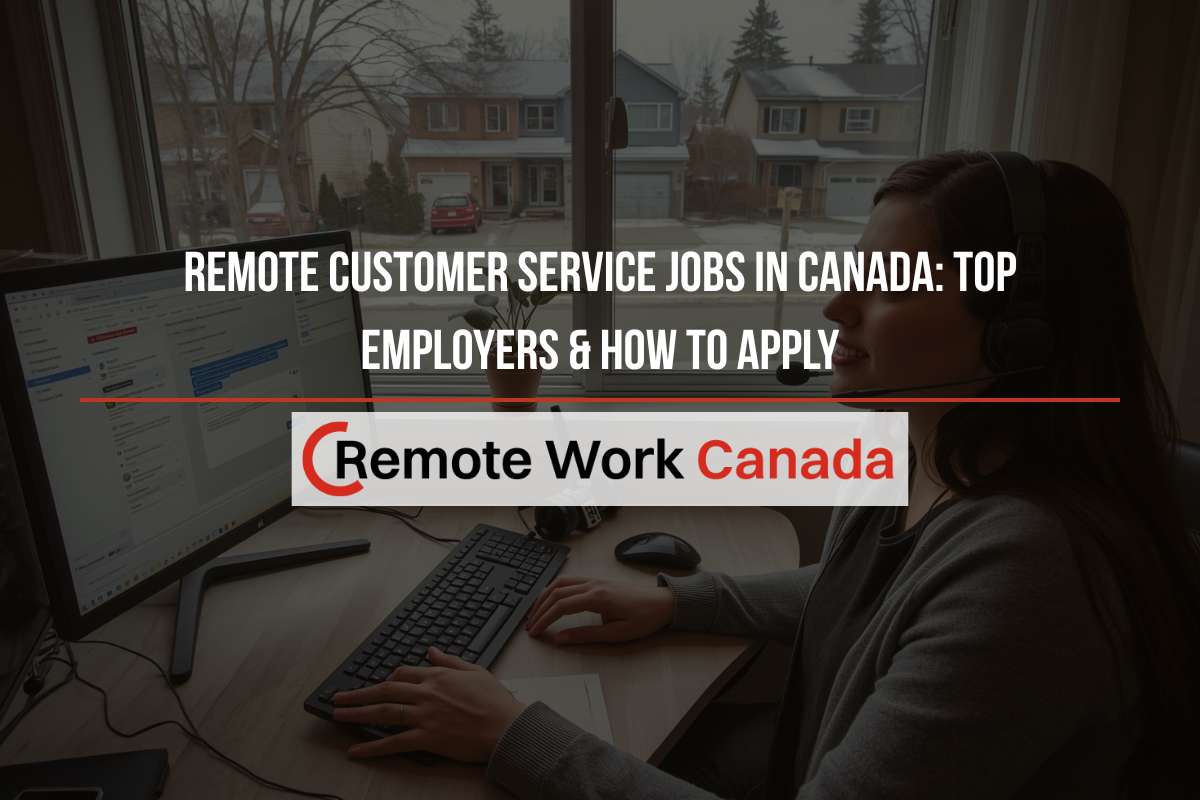

Customer service skills for remote work go far beyond answering phone calls and responding to emails. In 2026, Canadian employers are hiring virtual support professionals who can resolve complex issues independently, communicate with precision across written channels, and navigate multiple software platforms without supervision. According to a 2024 report by FlexJobs, customer service roles represent approximately 22% of all remote job postings in North America, making this one of the largest virtual employment categories available to Canadian workers today.
Yet most applicants get rejected. The gap between what job postings list and what hiring managers actually evaluate is significant. A 2023 LinkedIn Workforce Report found that 89% of hiring failures in customer service are caused by soft skill deficiencies rather than technical gaps. This guide breaks down the exact competencies that separate candidates who get hired from those who get ghosted.
The Core Customer Service Skills Remote Employers Prioritize
Remote customer service differs fundamentally from in-person support. Without physical cues, tone of voice, or the ability to walk over to a supervisor, remote agents need a sharper, more self-sufficient skill set. The following competencies consistently appear in high-demand remote job listings across Canada.

Written Communication Mastery
Written communication is the single most critical skill for remote customer service. When 80% or more of your interactions happen through live chat, email, or ticketing systems, every sentence you write becomes your professional reputation. A Grammarly Business report found that customer service teams with strong writing standards resolve tickets 23% faster than teams with inconsistent messaging.
What this looks like in practice:
- Clarity over cleverness. Customers want answers, not personality. Write in short, direct sentences. Avoid jargon they did not use first.
- Tone calibration. Match the emotional register of the customer. A frustrated customer needs acknowledgment before solutions. A confused customer needs step-by-step structure.
- Error-free output. Typos and grammatical mistakes erode trust instantly. Hiring managers often evaluate writing samples during the interview process.
Active Listening in a Text-Based World
Active listening sounds like a contradiction in a text-only environment, but the principle still applies. In remote customer service, active listening means reading the customer’s full message before responding, identifying both the stated and unstated problem, and confirming understanding before offering a solution.
According to Salesforce’s State of the Connected Customer report (2024), 73% of customers expect companies to understand their unique needs. Remote agents who demonstrate genuine comprehension through their responses generate significantly higher customer satisfaction scores.
Emotional Intelligence and De-escalation
Handling angry customers without face-to-face interaction requires a heightened level of emotional intelligence. Remote agents must detect frustration, anxiety, or confusion from text alone and respond with empathy before pivoting to problem-solving.
Harvard Business Review research (2023) found that customers who felt emotionally acknowledged during a support interaction were 6.2 times more likely to repurchase from the same company. The specific framework most employers train for is the L.A.S.T. method: Listen, Acknowledge, Solve, Thank.
CRM and Help Desk Proficiency
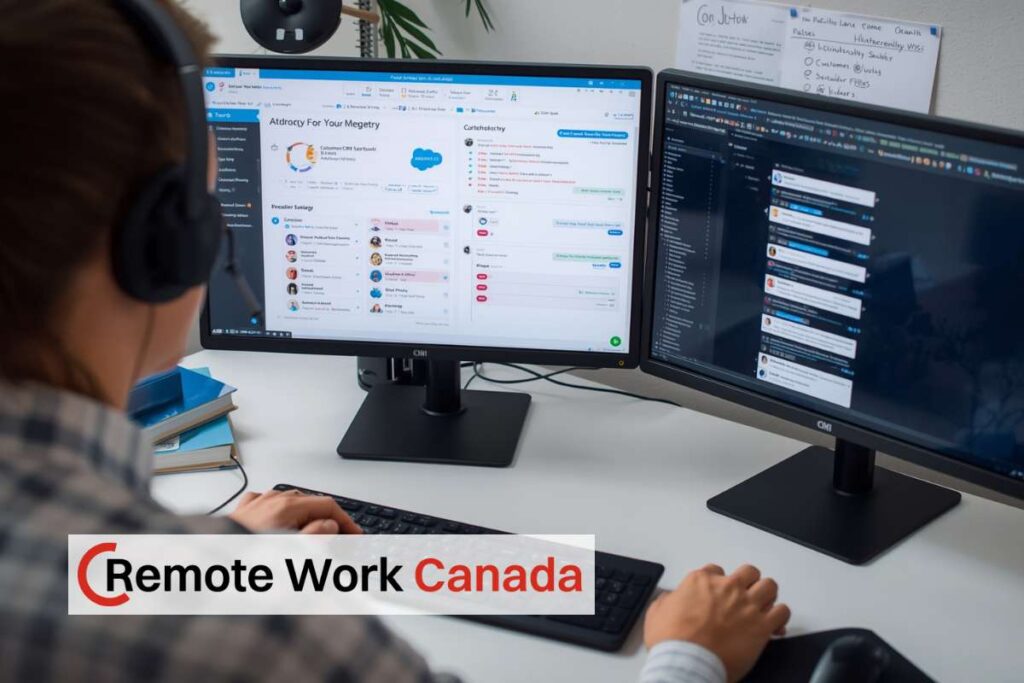
Technical literacy with customer relationship management (CRM) platforms is non-negotiable for remote service roles. Employers expect proficiency, not just familiarity, with tools like Zendesk, Freshdesk, Salesforce Service Cloud, HubSpot, and Intercom.
A 2024 Gartner survey reported that 67% of customer service organizations now require agents to manage three or more software tools simultaneously during a single interaction. If you are exploring beginner-friendly online jobs, investing time in free CRM training certifications before applying dramatically increases your callback rate.
Time Management and Self-Direction
Remote customer service agents work without a manager looking over their shoulder. Employers need people who can prioritize ticket queues, manage Service Level Agreements (SLAs, the maximum response time a company promises its customers), and maintain consistent productivity metrics across an 8-hour shift without direct oversight.
Buffer’s 2024 State of Remote Work survey found that 27% of remote workers cite difficulty with staying focused as their biggest challenge. Candidates who can demonstrate structured personal workflows, such as time-blocking and Pomodoro-based scheduling, stand out immediately in interviews.
Customer Service Skills: In-Office vs. Remote Requirements
The following comparison illustrates why traditional customer service experience alone does not fully prepare candidates for remote roles.
| Skill Dimension | In-Office Requirement | Remote Requirement |
| Communication | Verbal and non-verbal cues available | Written precision required across chat, email, and tickets |
| Problem-Solving | Can consult nearby colleagues quickly | Must troubleshoot independently using knowledge bases |
| Technical Skills | Shared office IT support available | Self-sufficient with CRM, VPN, and troubleshooting tools |
| Emotional Intelligence | Facial expressions and body language help | Must detect tone from text alone and calibrate responses |
| Time Management | Manager-supervised daily schedule | Fully self-directed across ticket queues and SLA targets |
| Collaboration | In-person team huddles | Asynchronous coordination via Slack, Teams, or email |
How to Build These Skills Before You Apply
You do not need prior customer service experience to develop these competencies. Several free and low-cost resources allow Canadian job seekers to build a competitive profile before submitting a single application.
- Complete a free CRM certification. HubSpot Academy, Salesforce Trailhead, and Zendesk Training all offer free courses with verifiable certificates. List these on your resume.
- Practice scenario-based writing. Draft sample responses to common customer complaints. Time yourself. Aim for clear, empathetic responses in under 90 seconds.
- Build a home office that supports performance. A quiet environment with reliable internet (minimum 25 Mbps download speed) is a baseline requirement for most remote service roles.
- Study the L.A.S.T. framework. Practice applying Listen, Acknowledge, Solve, Thank to written scenarios. This de-escalation methodology is used by companies including Amazon, Shopify, and TELUS.
- Sharpen your typing speed. Live chat agents typically need 60+ words per minute with 95% accuracy. Free tools like TypingClub and Keybr provide structured practice.
For a broader overview of virtual career paths, see our guide to the best work-from-home jobs in Canada for 2026.
Where Remote Customer Service Jobs Are Growing Fastest in Canada
The demand for remote customer service talent in Canada is concentrated in specific sectors. Statistics Canada’s Labour Force Survey (2024) reported that the professional, scientific, and technical services sector saw a 14% increase in remote job postings year over year, with customer support functions representing a substantial share.
The industries hiring the most remote customer service agents in 2026 include:
- Financial technology (fintech). Companies like Wealthsimple and Koho require agents who understand financial products and can handle sensitive account inquiries.
- E-commerce and SaaS. Shopify, Lightspeed, and other Canadian tech companies continuously hire remote support specialists.
- Telecommunications. TELUS, Rogers, and Bell all operate large remote customer service teams across multiple provinces.
- Healthcare technology. Virtual health platforms like Maple and Dialogue need support agents who can navigate privacy-sensitive interactions.
If you are interested in adjacent remote career paths, our guide on remote sales careers covers roles that share many of these same skill requirements.
Salary Expectations for Remote Customer Service in Canada
Compensation for remote customer service roles in Canada varies by industry, experience level, and whether the position is hourly or salaried. According to Glassdoor Canada data (2025), the national average salary for a remote customer service representative is approximately $42,000 to $52,000 CAD annually. Specialized roles in fintech or SaaS support can command $55,000 to $70,000 CAD.
Key compensation factors include:
- Bilingual agents (English and French) typically earn a 10% to 15% premium.
- Agents with Zendesk or Salesforce certifications see 12% higher starting offers on average.
- Evening and weekend shift availability increases hiring probability by approximately 30%.
For additional income strategies, explore our guide on how to make money online in Canada.
What Hiring Managers Actually Look for in Interviews
Remote customer service interviews follow a predictable pattern. Understanding the evaluation criteria gives you a decisive advantage.

Recruiters at companies like TELUS International and Concentrix have stated publicly that they evaluate candidates on three dimensions during virtual interviews:
- Scenario response quality. You will be given a hypothetical customer situation (angry caller, billing dispute, technical issue) and asked to respond in writing or verbally. Speed and empathy are both measured.
- Technical environment readiness. Interviewers will ask about your internet speed, workspace setup, and backup plans for power or connectivity outages.
- Self-management evidence. Expect behavioral questions like ‘Describe a time you managed competing priorities without supervision.’ Have specific, measurable examples prepared.
“The candidates who stand out are the ones who treat the interview itself as a customer interaction,” says Rachel Gupta, a talent acquisition lead at a major Canadian BPO firm. “They are responsive, clear, organized, and empathetic before we even ask them a single behavioral question.”
Frequently Asked Questions
What are the most important customer service skills for remote work?
The most critical customer service skills for remote work are written communication mastery, CRM platform proficiency (Zendesk, Salesforce, Freshdesk), emotional intelligence, active listening through text-based channels, and self-directed time management. According to LinkedIn’s 2023 Workforce Report, 89% of customer service hiring failures are caused by soft skill gaps, making these competencies more important than technical experience alone.
Do I need experience to get a remote customer service job in Canada?
No. Many Canadian employers hire entry-level remote customer service agents. The key differentiator is demonstrable skill readiness: completing free CRM certifications (HubSpot Academy, Salesforce Trailhead), maintaining a typing speed above 60 WPM, and showing familiarity with help desk workflows. Candidates who invest 20 to 30 hours in self-directed training before applying significantly outperform those relying on experience alone.
How much do remote customer service jobs pay in Canada?
Remote customer service salaries in Canada range from approximately $42,000 to $52,000 CAD annually for general roles, and $55,000 to $70,000 CAD for specialized positions in fintech or SaaS. Bilingual agents (English and French) typically earn a 10% to 15% premium. Agents with platform-specific certifications see starting offers approximately 12% higher than uncertified applicants.
What software tools do remote customer service agents use?
Remote customer service agents commonly work with CRM platforms (Zendesk, Salesforce Service Cloud, Freshdesk), live chat tools (Intercom, LiveChat), communication platforms (Slack, Microsoft Teams), knowledge base systems (Confluence, Notion), and call center software (Five9, Genesys, Talkdesk). A 2024 Gartner survey found that 67% of service organizations require agents to manage three or more tools simultaneously during each customer interaction.
How can I improve my chances of getting hired for remote customer service?
Complete at least one free CRM certification, practice writing customer response scenarios under time pressure, ensure your home office meets technical requirements (25+ Mbps internet, quiet environment, backup power), and prepare specific behavioral interview examples that demonstrate self-management. Availability for evening and weekend shifts increases hiring probability by approximately 30%.