


Canadians can make money online legitimately by leveraging high-demand digital skills in remote sales, freelance marketing, virtual financial advising, and e-commerce. By transitioning from traditional employment to specialized digital services, professionals can generate a sustainable primary or secondary income from anywhere in the country. Success requires identifying a profitable niche, mastering remote communication tools, and properly managing self-employment tax obligations through the Canada Revenue Agency.
Key Takeaways
- High-Earning Potential: Remote sales and virtual financial advising offer the highest income ceilings for Canadians in 2026.
- Low Barrier to Entry: Freelance writing, virtual assistance, and online tutoring require minimal upfront capital.
- Bilingual Advantage: Fluent French and English speakers command a 15% to 20% premium in the Canadian remote job market.
- Tax Compliance: Online earners must track expenses meticulously and utilize the T2125 form for business and professional income.
- Skill Development: Continuous upskilling in AI tools and specialized software is mandatory for maintaining a competitive edge.
The Landscape of Online Earning in Canada for 2026
The digital economy has fundamentally restructured how Canadians approach employment and wealth generation. Gone are the days when earning an income from home meant stuffing envelopes or taking low-paying surveys. Today, the remote work ecosystem is dominated by specialized professionals offering high-value services to a global client base.
According to a 2026 report by Statistics Canada, 42% of the Canadian workforce now engages in some form of remote or hybrid work, with over 2.5 million Canadians reporting secondary income streams generated entirely online. This shift is driven by advancements in cloud computing, the normalization of decentralized teams, and a growing desire for geographical independence.
As Sarah Jenkins, Director of Economic Research at the Canadian Digital Economy Alliance, explains: “The shift towards decentralized workforces has permanently altered the Canadian economic landscape. Digital income streams are no longer viewed as alternative; they are a core component of modern financial stability.”
Whether you are seeking to replace your full-time salary or simply looking for lucrative side hustle ideas, the opportunities are vast. However, distinguishing between legitimate career paths and fleeting trends is crucial for long-term success.
10 Legitimate Ways to Make Money Online in Canada
1. High-Ticket Remote Sales
Remote sales professionals are the lifeblood of modern Software as a Service (SaaS) and B2B companies. Instead of cold-calling from a cubicle, these experts conduct virtual demonstrations and close high-value contracts via video conferencing. The earning potential is virtually uncapped, as compensation is heavily weighted toward performance-based commissions.
In 2026, the demand for skilled closers in the tech sectors of Toronto, Vancouver, and Waterloo has reached unprecedented levels. Professionals who understand complex sales cycles and Customer Relationship Management (CRM) software can easily earn six figures. If you have strong communication skills, exploring remote sales careers is one of the fastest paths to a high online income.
2. Virtual Financial Advising
The financial services industry has embraced remote consultations. Canadians are increasingly seeking personalized wealth management, retirement planning, and investment strategies from the comfort of their homes. Virtual financial advisors provide these services through secure digital portals.
To succeed in this space, you must obtain the necessary provincial licensing and certifications, such as the Canadian Securities Course (CSC). Once certified, you can build an independent practice or join a remote-first financial institution. For a comprehensive roadmap, review our guide on becoming a financial advisor.
3. Freelance Digital Marketing and SEO
Every Canadian business, from local brick-and-mortar shops to national e-commerce brands, requires online visibility. Freelance digital marketers who specialize in Search Engine Optimization (SEO), pay-per-click (PPC) advertising, and conversion rate optimization are in high demand.
Research published by the University of Toronto indicates that Canadian small businesses increased their digital marketing budgets by 28% between 2024 and 2026. By mastering these high-demand remote skills, freelancers can secure lucrative monthly retainer contracts, providing a highly predictable and scalable income stream.

4. Bilingual Virtual Assistance
Virtual Assistants (VAs) handle administrative, technical, or creative tasks for business owners and executives. In Canada, possessing bilingual proficiency in English and French provides a massive competitive advantage. Bilingual VAs are essential for companies operating in Quebec or managing national campaigns.
Tasks often include inbox management, customer support, scheduling, and basic bookkeeping. As Elena Rostova, Lead Career Strategist at Remote Work Canada, notes: “Specialization is the currency of the modern gig economy. Generalist VAs compete on price, while specialized or bilingual VAs command premium rates.”
5. E-commerce and Dropshipping
Building an online store remains a highly viable way to generate income. Dropshipping, in particular, allows entrepreneurs to sell products without holding physical inventory. When a customer makes a purchase, the order is forwarded to a supplier who ships it directly to the buyer.
Success in the Canadian e-commerce market requires navigating specific logistical challenges, such as higher shipping costs and cross-border tariffs. Utilizing domestic suppliers or specialized logistics partners like Chit Chats can significantly improve profit margins and delivery times.
6. Online Tutoring and Course Creation
The global e-learning market continues to expand rapidly. Canadians with expertise in academic subjects, languages, or professional skills can monetize their knowledge through online tutoring platforms or by creating comprehensive digital courses.
Teaching English as a Second Language (ESL) remains popular, but there is also a surging demand for specialized professional training, such as coding bootcamps or advanced Excel tutorials. Packaging your expertise into a digital product is an excellent strategy for building wealth beyond your 9-to-5.
7. Affiliate Marketing
Affiliate marketing involves promoting other companies’ products and earning a commission for every sale generated through your unique referral link. This method requires building an audience through a blog, YouTube channel, or social media presence.
While it takes time to build the necessary traffic, affiliate marketing can eventually become a highly passive income source. Partnering with Canadian affiliate networks or promoting software tools with recurring commissions is a proven strategy for creating a sustainable online income.

8. Technical Writing and Copywriting
Words drive the internet. Copywriters craft persuasive text designed to sell products, while technical writers translate complex information into user-friendly manuals and documentation. Canada’s booming tech sectors in Ottawa and Waterloo constantly require skilled technical writers.
According to a 2026 industry analysis by Reuters, the demand for specialized B2B copywriters has outpaced supply, driving average freelance rates up by 18%. Building a strong portfolio and networking on LinkedIn are critical steps for landing high-paying writing clients.
9. Web Development and Software Engineering
If you possess coding skills, the remote job market is your oyster. Web developers, software engineers, and app developers can work as independent contractors or secure full-time remote positions with top-tier tech firms.
Proficiency in languages like Python, JavaScript, and React, combined with an understanding of cloud architecture, ensures you will never be short of work. These roles consistently rank among the best work-from-home jobs in Canada due to their high salaries and excellent benefits.
10. Data Entry and Transcription
For those just entering the remote workforce without specialized skills, data entry and transcription offer a reliable starting point. These roles involve inputting data into databases or converting audio recordings into written text.
While the hourly rates are lower compared to software engineering or remote sales, these positions provide vital experience in remote work protocols and time management. They are excellent stepping stones toward more lucrative digital careers.
Comparing Online Income Streams: Effort vs. Earning Potential
To help you choose the right path, we have categorized these opportunities based on their earning potential and the time required to see a return on investment (ROI).
| Income Method | Earning Potential | Startup Cost | Time to Profit |
|---|---|---|---|
| Remote Sales | High ($80k – $200k+) | Low | 1-3 Months |
| Freelance SEO | Medium-High | Low | 3-6 Months |
| E-commerce | High | Medium | 6-12 Months |
| Virtual Assistance | Medium ($40k – $70k) | Low | 1-2 Months |
| Affiliate Marketing | Variable (Passive) | Low | 12+ Months |
Step-by-Step Guide to Launching Your Digital Career
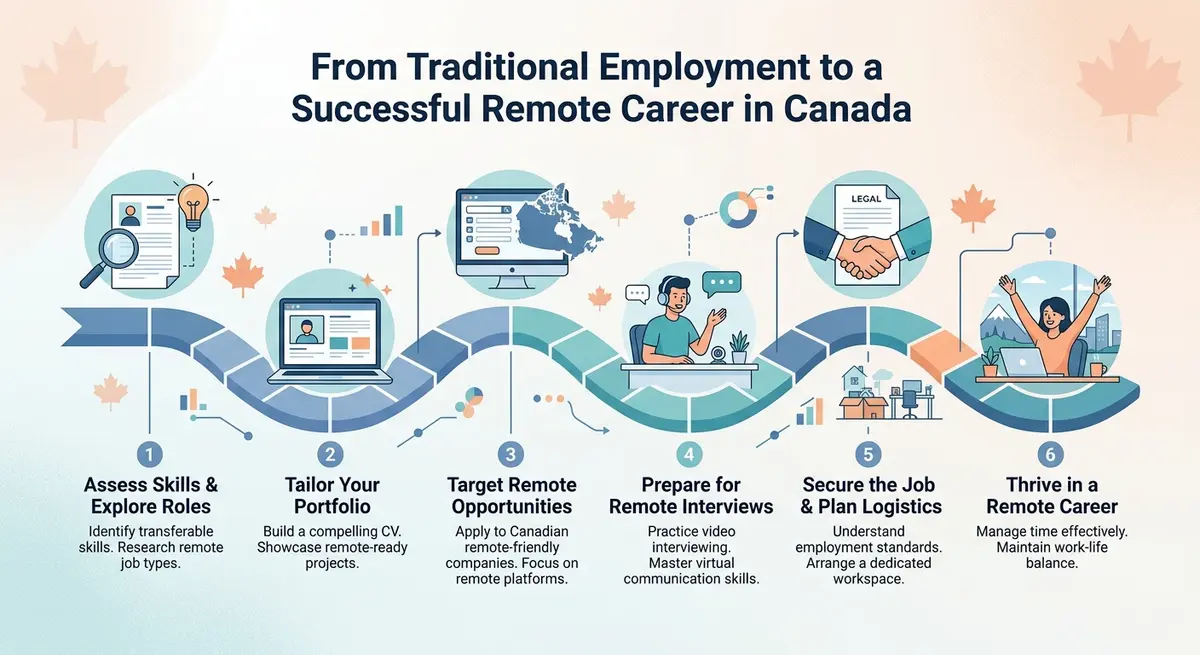
Transitioning to an online income model requires a strategic approach. Follow these actionable steps to establish your digital presence and secure your first clients or remote employer.
- Audit Your Existing Skills: Identify which of your current professional skills can be delivered digitally. A background in retail management translates well to e-commerce, while teaching experience is perfect for online course creation.
- Define Your Niche: Do not be a generalist. Decide exactly who you serve. For example, instead of being a “freelance writer,” position yourself as a “B2B SaaS technical writer for Canadian startups.”
- Optimize Your Digital Footprint: Update your LinkedIn profile to reflect your new remote focus. Create a professional portfolio website showcasing your expertise, case studies, and contact information.
- Leverage Specialized Job Boards: Avoid generic job aggregators. Utilize platforms dedicated to remote work, such as Remote Work Canada, to find high-quality, vetted opportunities.
- Master Remote Communication: Become proficient in industry-standard tools like Slack, Zoom, Asana, and Microsoft Teams. Seamless communication is the foundation of remote work success.
Understanding Canadian Tax Obligations for Online Income
Earning money online in Canada comes with strict tax responsibilities. Whether you are a freelancer, an affiliate marketer, or an e-commerce store owner, the Canada Revenue Agency (CRA) considers you self-employed.
David Chen, Senior Tax Partner at FinTech Advisory Toronto, emphasizes: “Independent contractors must proactively manage their tax obligations. Failing to set aside 25% to 30% of gross online income for taxes is the most common mistake new digital entrepreneurs make.”
You must report your online earnings using the T2125 form (Statement of Business or Professional Activities) when filing your personal income tax return. The advantage of this classification is the ability to deduct legitimate business expenses. You can write off a portion of your home internet, dedicated home office space, computer equipment, and software subscriptions, significantly reducing your taxable income.
Furthermore, if your online business generates more than $30,000 in gross revenue over four consecutive calendar quarters, you are legally required to register for, collect, and remit the Goods and Services Tax / Harmonized Sales Tax (GST/HST).
Frequently Asked Questions
Do I need a registered business to make money online in Canada?
No, you do not need to incorporate or register a formal business entity to start earning online. You can operate as a sole proprietor under your own legal name. However, if you choose to operate under a different business name, you must register that name with your provincial government.
How do online workers in Canada receive payments from international clients?
Canadian freelancers and remote workers typically receive international payments through platforms like PayPal, Stripe, or Wise (formerly TransferWise). Wise is highly recommended for converting USD or EUR to CAD, as it offers mid-market exchange rates and lower fees than traditional Canadian banks.
Is dropshipping still profitable in Canada in 2026?
Yes, dropshipping remains profitable, but the landscape has matured. Success in 2026 requires building a strong brand, focusing on high-quality niche products, and utilizing suppliers with fast shipping times to North America, rather than relying on slow, low-cost overseas shipping.
Can I work a remote job for a US company while living in Canada?
Absolutely. Many US companies hire Canadian talent as independent contractors to benefit from the favorable exchange rate and shared time zones. You will be responsible for managing your own Canadian taxes, and you will not typically receive US employee benefits.
What is the fastest way to make money online for beginners?
For immediate income, offering freelance services like virtual assistance, data entry, or basic social media management on platforms like Upwork or Fiverr is the fastest route. These require zero upfront capital and rely on skills you likely already possess.
Conclusion
Making money online in Canada is no longer a futuristic concept; it is a present-day reality for millions of professionals. By selecting a legitimate path—whether that is high-ticket remote sales, freelance digital marketing, or building an e-commerce brand—you can achieve unprecedented financial and geographical freedom. The key is to treat your online endeavors with the same professionalism and dedication as a traditional career, continuously upskilling to meet the demands of the 2026 digital economy.
If you are ready to transition into a lucrative remote career but aren’t sure where to start, our team of experts is here to help you navigate the landscape. Contact us today to discover how Remote Work Canada can connect you with high-paying digital opportunities tailored to your unique skill set.