
Call center jobs no experience Canada searches have surged across major job boards, and for good reason. The Canadian contact centre industry employs approximately 181,700 customer service representatives nationwide, according to the Government of Canada Job Bank. Many of these positions require zero prior experience and offer full training on the job.
Whether you are a recent graduate, a career changer, or someone re-entering the workforce, call centre work provides a reliable entry point into the Canadian job market. Entry-level positions start around $35,100 per year, with experienced agents earning upward of $50,000 annually. This guide breaks down exactly how to find, apply for, and land your first call centre role in Canada without any previous experience.
Why Call Centres Actively Hire Candidates With No Experience
Call centres prioritize soft skills over technical backgrounds. The reason is straightforward: companies can teach product knowledge and CRM software in a two-week training program, but they cannot teach empathy, patience, or clear verbal communication.

According to a 2024 Talent Board benchmark study, 92% of candidates will sever ties with an employer after a negative hiring experience. Call centres understand this dynamic from both sides. They look for people who naturally handle human interaction well, because those traits directly translate to positive customer outcomes.
The Canadian contact centre market is projected to grow 4.8% annually through 2028. This consistent expansion creates ongoing demand for new agents, particularly in telecommunications, banking, insurance, and e-commerce verticals. Employers like TD Bank, Teleperformance Canada, and CIBC regularly post entry-level openings that explicitly state “no experience required.”
What Entry-Level Call Centre Roles Actually Look Like
Entry-level call centre positions in Canada fall into three primary categories. Understanding the differences helps you target the right openings and tailor your application accordingly.
Inbound Customer Service Representative
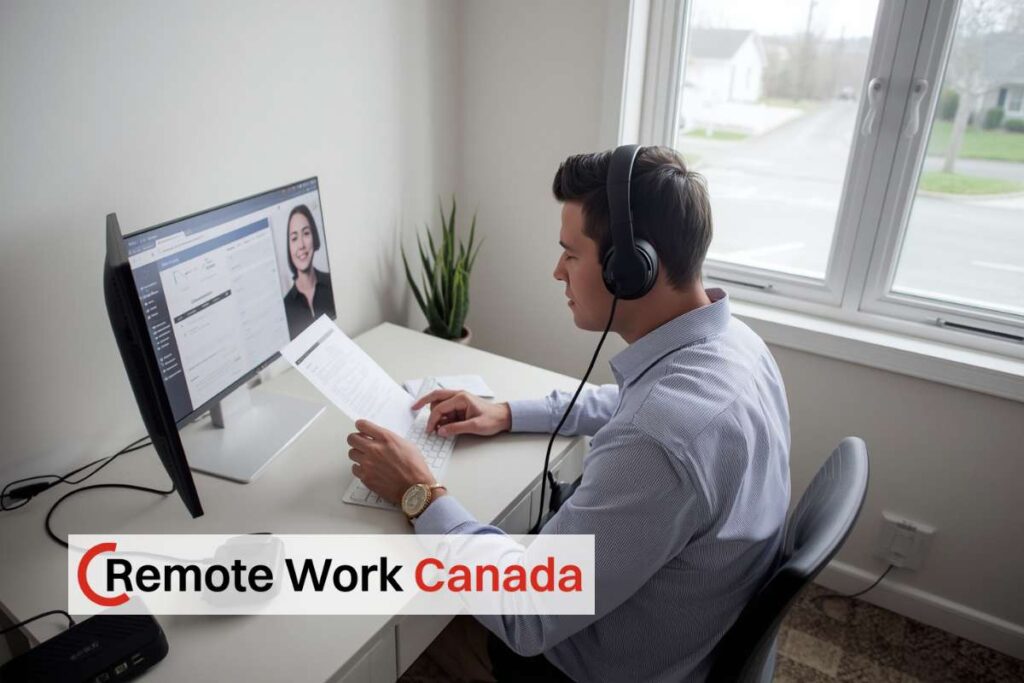
Inbound agents answer incoming calls from customers who need help with billing questions, account changes, or product troubleshooting. This is the most common entry-level role. You follow scripted responses for standard issues and escalate complex problems to senior staff. Most employers provide 5 to 10 business days of paid training before you take your first live call.
Outbound Sales or Survey Agent
Outbound agents make calls to potential or existing customers. Tasks include confirming appointments, conducting satisfaction surveys, or presenting product upgrades. These roles often include a base wage plus commission structure. If you are comfortable initiating conversations, outbound positions can offer higher total compensation.
Live Chat and Email Support Agent
Not every call centre job involves a phone. Many companies now hire agents specifically for chat-based and email support channels. These positions suit candidates who are strong writers and prefer text-based communication. The omnichannel contact centre solutions market is expanding rapidly and was valued at approximately USD $24.5 billion in 2024, which means chat-based roles will continue to grow.
How Much Do Entry-Level Call Centre Jobs Pay in Canada?
Compensation varies by province, employer, and whether the role is remote or on-site. The following table summarizes current salary data from multiple Canadian job market sources.
| Experience Level | Annual Salary Range (CAD) | Hourly Equivalent |
| Entry-Level (0-1 years) | $34,883 – $36,607 | $16 – $19/hr |
| Mid-Level (2-5 years) | $40,000 – $50,000 | $20 – $25/hr |
| Senior (8+ years) | $50,044 – $54,150 | $25 – $28/hr |
Sources: ERI SalaryExpert 2026, Glassdoor Canada 2026, Talent.com
Bilingual agents who speak both English and French consistently earn 10% to 15% more than unilingual counterparts. Quebec and Nova Scotia currently offer the strongest growth prospects for customer service roles, according to Glassdoor’s 2026 Canadian market analysis.
Skills That Replace Experience on Your Application
When a job posting says “no experience required,” employers are really saying: “We will train you on the technical parts, but you must already possess the foundational skills.” Here is what they evaluate.
| Skill | Why It Matters |
| Active Listening | Callers need to feel heard before they accept a solution. Agents who paraphrase and confirm understanding resolve issues 23% faster on average. |
| Clear Verbal Communication | You must explain policies, walk through steps, and de-escalate frustration using only your voice. Clarity reduces average handle time. |
| Basic Computer Literacy | You will navigate CRM platforms, internal databases, and multiple browser tabs simultaneously. Typing speed of 35+ WPM is a common baseline. |
| Adaptability | Call types change constantly. You might handle a billing dispute, then a product return, then a technical question in consecutive calls. |
| Emotional Resilience | Frustrated callers are part of the job. Employers want candidates who can stay professional and composed under pressure. |
According to the Government of Canada Job Bank, a high school diploma is the standard education requirement for call centre roles. The majority of agents, approximately 56%, hold this as their highest level of education.
Remote vs. On-Site Call Centre Jobs: Which Should You Target?
The shift toward remote call centre work accelerated dramatically during 2020 and has not reversed. The virtual call centre market is growing at an 18% compound annual growth rate (CAGR) through 2030, which means remote positions will continue expanding for the foreseeable future.
| Factor | Remote | On-Site |
| Training | Virtual onboarding via video call; self-paced modules | In-person classroom training; immediate peer support |
| Equipment | Most employers ship a headset and laptop; you provide reliable internet | All equipment provided on-site |
| Flexibility | Often offers flexible shift selection; eliminates commute | Fixed schedules; commute time applies |
| Supervision | Screen monitoring and quality audits via software | Direct floor supervision and real-time coaching |
| Best For | Self-motivated candidates in smaller cities or rural areas | Candidates who prefer structured environments and in-person mentorship |
If you live outside major metropolitan centres like Toronto, Vancouver, or Montreal, remote positions dramatically expand your options. Companies like Teleperformance, Public Storage Canada, and MCI Careers all post remote call centre openings that serve agents across every province.
Step-by-Step: How to Land Your First Call Centre Job

1. Build a Targeted Resume
You do not need call centre experience to write an effective resume. Focus on transferable skills from retail, food service, volunteer work, or school projects. Quantify wherever possible: “Handled 40+ customer transactions daily” or “Resolved scheduling conflicts for a team of 12 volunteers.”
Use your summary section to address the experience gap directly. For example: “Customer-focused communicator with strong problem-solving skills seeking an entry-level call centre position. Comfortable working in fast-paced environments and eager to complete employer-provided training.”
For resume formatting guidance and submission tips, visit the resume submission page to get your application materials reviewed.
2. Target the Right Job Boards
General boards like Indeed and LinkedIn list hundreds of call centre openings. However, filtering specifically for “no experience” or “entry-level” roles saves significant time. As of mid-2026, LinkedIn lists over 850 remote call centre jobs in Canada, while Indeed shows more than 400 remote customer service positions.
Beyond the major boards, check company career pages directly. Large employers like TD Bank, Bell Canada, Rogers Communications, and Scotiabank maintain dedicated hiring portals where entry-level roles appear before they reach aggregator sites.
3. Prepare for the Phone or Video Interview
Call centre interviews are deliberately designed to evaluate how you communicate under pressure. Expect these common scenarios:
Situational questions: “Tell me about a time you dealt with a difficult person.” Behavioral assessments: “How would you handle a caller who is upset about a billing error?” Role-play exercises: Some employers conduct a simulated call during the interview to test your tone, pacing, and problem-solving in real time.
Practice speaking clearly and at a moderate pace. Avoid filler words like “um” and “uh.” Record yourself answering sample questions and listen back critically. This single preparation step gives you a measurable advantage over candidates who skip it.
4. Ace the Assessment Tests
Many employers require pre-hire assessments. These typically include a typing speed test (35+ WPM minimum), a basic computer skills evaluation, and a personality or situational judgment assessment. Some companies also test English proficiency and, for bilingual roles, French fluency.
Free typing test platforms like TypingTest.com and Keybr.com can help you reach the minimum threshold within a few days of practice.
5. Leverage Transferable Certifications
While not required, adding a customer service certification to your resume demonstrates initiative. Consider free or low-cost options from platforms like Coursera, LinkedIn Learning, or HubSpot Academy. A certificate in CRM fundamentals or customer service management tells employers you have already invested in understanding the profession.
For a broader overview of skills employers are actively hiring for, explore the current skills landscape to identify additional certifications that strengthen your profile.
Top Industries Hiring No-Experience Call Centre Agents in Canada
Not all call centres are created equal. The industry vertical you choose affects your schedule, stress level, and long-term career trajectory.
Banking and Financial Services: TD Bank, CIBC, and Scotiabank hire thousands of agents annually. These roles offer structured career paths from agent to team lead to supervisor. Banking centres typically operate during extended business hours rather than 24/7.
Telecommunications: Bell, Rogers, and Telus are among the largest call centre employers in Canada. Expect high call volumes, but also robust training programs and competitive benefits packages.
Insurance: Companies like Manulife and Sun Life hire customer service representatives for claims support and policy inquiries. Insurance call centres tend to offer higher starting wages and more predictable schedules.
E-Commerce and Retail: Amazon, Shopify merchants, and major retailers run large contact centre operations. These roles spike during holiday seasons, making them ideal for candidates who want to start quickly.
Government Services: Federal and provincial agencies hire call centre staff for programs like the CRA, Service Canada, and provincial health lines. Government positions typically offer union protections, pension plans, and above-average job security.
Career Progression: Where Call Centre Experience Takes You
A call centre position is not a dead end. It is a launchpad. The skills you develop handling customer interactions transfer directly into higher-paying roles across multiple departments.
After 6 to 12 months as a frontline agent, common advancement paths include: quality assurance analyst, team lead or supervisor, workforce management coordinator, training facilitator, and customer success manager. Senior-level representatives with 8+ years of experience earn between $50,044 and $54,150 annually, according to ERI SalaryExpert’s 2026 data.
Many agents also pivot into adjacent careers like remote sales, account management, or operations coordination. The communication and conflict-resolution skills built in a call centre are among the most transferable in the entire job market.
Common Mistakes That Get Entry-Level Applications Rejected
Hiring managers at call centres review hundreds of applications per week. Avoid these errors that immediately disqualify candidates:
Generic resumes: “Seeking a challenging opportunity” tells a recruiter nothing. Replace generic objectives with specific value statements tied to the role.
Ignoring the job description: If the posting asks for availability on evenings and weekends, confirm your availability explicitly in your cover letter.
Poor voicemail greetings: Recruiters call back quickly. If your voicemail is unprofessional or your inbox is full, you lose the opportunity.
Skipping the assessment: Some candidates abandon the application when they encounter a pre-hire test. Completing it, even imperfectly, keeps you in the pipeline. Abandoning it removes you permanently.
Frequently Asked Questions
Can you get a call centre job in Canada with absolutely no work experience?
Yes. Many Canadian employers, including TD Bank, Teleperformance, and Bell Canada, explicitly advertise entry-level call centre positions that require no prior work experience. These companies provide full paid training programs lasting 5 to 15 business days. A high school diploma and strong communication skills are the primary requirements.
How much do entry-level call centre agents earn in Canada?
Entry-level call centre agents in Canada earn between $34,883 and $36,607 per year, which translates to roughly $16 to $19 per hour. Bilingual agents who speak English and French typically earn 10% to 15% more. Salaries vary by province, with Ontario and Quebec generally offering higher compensation than other regions.
Are remote call centre jobs legitimate in Canada?
Absolutely. Major employers including Public Storage Canada, CIBC, Teleperformance, and MCI Careers all offer legitimate remote call centre positions. As of 2026, job boards list over 850 remote call centre openings across Canada. Legitimate remote employers provide equipment, structured training, and standard employment benefits.
What skills do I need for a no-experience call centre job?
The essential skills are active listening, clear verbal communication, basic computer literacy (including a typing speed of 35+ words per minute), adaptability, and emotional resilience. Employers prioritize these soft skills over technical experience because product-specific training is provided during onboarding.
Do call centres in Canada hire international students or newcomers?
Many call centres hire international students who hold valid work permits. English fluency is the primary language requirement, though bilingual candidates (particularly English-French) are in especially high demand. Some employers also hire agents who speak Mandarin, Punjabi, Spanish, or Arabic for specialized customer service lines serving diverse communities.
What is the fastest way to get hired at a call centre?
Apply directly through company career pages rather than relying solely on job boards. Tailor your resume to highlight transferable communication skills, complete all pre-hire assessments promptly, and be available for flexible scheduling including evenings and weekends. Candidates who apply to 10 or more positions simultaneously and follow up within 48 hours significantly increase their odds of landing interviews.