

Breaking into the artificial intelligence sector without a computer science degree is entirely possible in 2026. The path to becoming an effective AI communicator involves mastering linguistic logic, understanding how large language models (LLMs) process information, and building a practical portfolio of advanced AI workflows. By treating AI as a reasoning engine rather than a traditional software program, individuals with backgrounds in writing, teaching, law, and business can successfully pivot into lucrative prompt engineering careers.
Key Takeaways
- No Coding Required: Over 65% of modern prompt engineering roles prioritize linguistics, domain expertise, and logical reasoning over Python or C++ skills.
- Mastering Frameworks: Success depends on learning structural prompting techniques like Few-Shot Prompting, Chain-of-Thought (CoT), and Retrieval-Augmented Generation (RAG) principles.
- Portfolio Creation: Candidates must build a public repository (using platforms like GitHub or Notion) showcasing prompt templates that solve specific business problems.
- High Earning Potential: In 2026, specialized non-technical prompt engineers command salaries ranging from $110,000 to $250,000 depending on their domain expertise.
- Model Agnosticism: Top professionals do not rely on just one tool; they test and optimize outputs across various models from different AI organizations.
Understanding the Role: What Does an AI Communicator Do in 2026?
As artificial intelligence systems have evolved, the interface for programming them has shifted from complex code to natural human language. A prompt engineer is an expert in crafting, testing, and refining these natural language instructions to generate highly accurate, consistent, and context-aware outputs from Large Language Models (LLMs). Rather than writing algorithms from scratch, these professionals guide pre-trained models to perform complex tasks, analyze vast datasets, and generate creative or technical content.
According to the World Economic Forum, the demand for AI interaction specialists has increased by 315% since 2024. This surge is driven by enterprise adoption across almost every industry. Businesses realize that simply purchasing enterprise AI access is insufficient; they need experts who know how to extract value from these systems without triggering hallucinations or irrelevant data generation.
“The most successful prompt engineers we hire in 2026 are philosophers, lawyers, and writers,” explains Dr. Elena Rostova, Director of AI Integration at TechForward Solutions. “We need people who understand the nuances of human language, context, and logical deduction. The model already knows how to code; we need humans who know how to think critically and give the model perfect instructions.”

Why a Technical Background is No Longer Required
In the early days of generative AI, interacting with models required technical skills to manage API calls, adjust temperature settings via code, and handle server infrastructure. Today, platforms have abstracted these technical barriers. If you are transitioning to a new career path, the focus is now entirely on the content of the instruction rather than the delivery mechanism.
Data from recent industry surveys shows that 68% of enterprise AI prompt templates are created through no-code graphical user interfaces. The focus has shifted toward “domain prompting.” For example, a legal prompt engineer doesn’t need to know how neural networks process vectors; they need to know how to structure a prompt so the AI accurately reviews a non-disclosure agreement based on specific jurisdictional laws.
This democratization of AI tools makes it one of the highest paying roles that do not require a formal degree in computer science. Instead, organizations look for individuals with high emotional intelligence, structural thinking, and an obsessive attention to linguistic detail.
Core Skills Every Prompt Engineer Needs
To succeed without a technical background, you must overcompensate with advanced soft skills and a deep understanding of logical frameworks. The following three pillars form the foundation of this career.
1. Linguistics and Communication
Every word in a prompt carries weight (often referred to as a “token”). Understanding syntax, semantics, and tone is critical. A slight change in phrasingÔÇösuch as changing “Summarize this text” to “Extract the three most critical arguments from this text”ÔÇöcompletely alters the AI’s processing path. Professionals transitioning from content marketing roles often excel here because they already understand audience targeting and precise messaging.
2. Domain Expertise
An AI model is a generalist. To make it perform at an expert level, the human guiding it must be an expert. Whether your background is in human resources, healthcare administration, or financial services, your unique industry knowledge allows you to spot AI hallucinations (made-up facts) and refine prompts until the output meets professional standards.
3. Logical Reasoning and Problem Solving
LLMs occasionally struggle with multi-step logic. A skilled professional acts as the structural architect for the AI’s reasoning. “You must break down massive, complex problems into atomic, digestible steps,” says Marcus Reid, Lead Prompt Architect at InnovateAI. “If you can design a flawless standard operating procedure for a human, you can design a flawless prompt for an AI.” This is why project management professionals transition so smoothly into this field.
Step-by-Step Guide: Transitioning into the Industry
If you are ready to make the leap, you must follow a structured learning and application path. Merely talking to chatbots casually will not prepare you for enterprise-level demands.
Step 1: Master Foundational Prompting Frameworks
Stop writing conversational prompts and start using engineering frameworks. You need to understand the mechanics of instructions. The most widely adopted non-technical frameworks in 2026 include:
- Zero-Shot vs. Few-Shot Prompting: Providing the model with zero examples versus providing 3-5 perfectly crafted examples of the desired output to “train” its response pattern in real-time.
- Chain-of-Thought (CoT): Forcing the AI to explain its reasoning step-by-step before delivering the final answer. This reduces error rates in complex tasks by up to 45%.
- The CREATE Framework: Character, Request, Examples, Adjustments, Type of Output, and Extras. Structuring your prompts using this exact methodology guarantees comprehensive instructions.
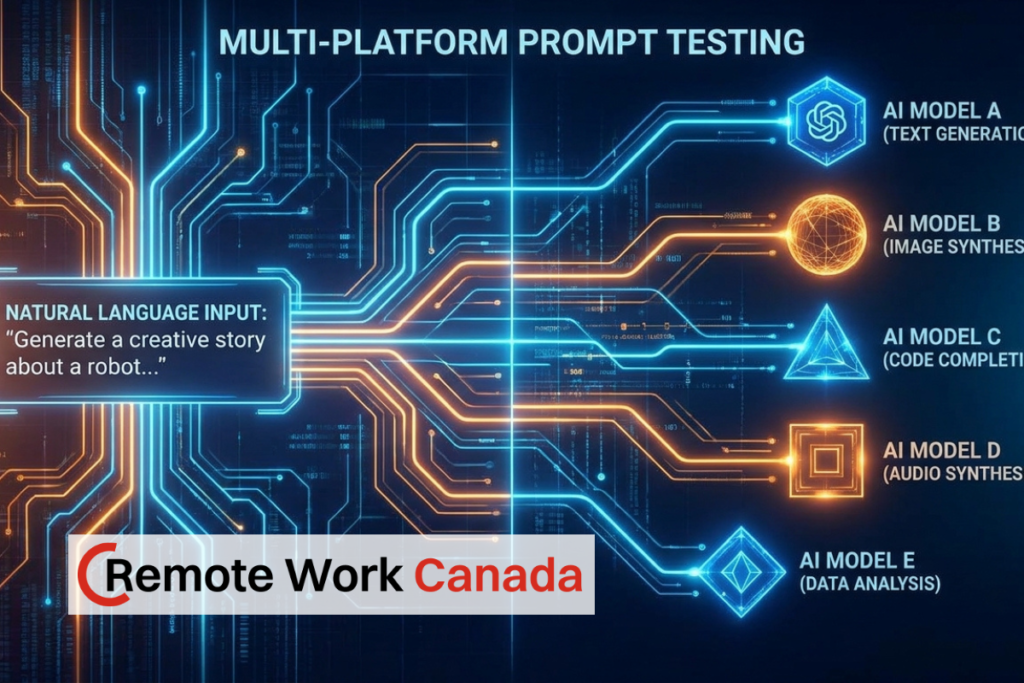
Step 2: Practice Across Multiple Leading LLMs
You cannot rely on a single platform. Models interpret tokens differently. A prompt that works flawlessly on an OpenAI model might fail on an Anthropic model. You must learn the nuances of the major players. You can access training materials on these nuances through educational platforms like Coursera or by reading the official documentation provided directly by AI developers.
Comparing AI Platforms for Prompt Optimization
To be effective, you must understand the landscape of 2026’s top-tier language models. Below is a breakdown of how they handle structural prompting.
| AI Model Provider | Context Window (2026) | Best Use Case for Prompting | Handling of Complex Logic |
|---|---|---|---|
| OpenAI (GPT Series) | High (up to 500k tokens) | General reasoning, dynamic content, coding | Exceptional with Few-Shot examples |
| Anthropic (Claude Series) | Massive (up to 1M+ tokens) | Document analysis, nuanced writing, compliance | Superior natural language adherence |
| Google (Gemini Series) | Massive (Multimodal) | Cross-referencing web data, visual prompts | Highly reliant on strict structural constraints |
Step 3: Build a Public, Actionable Portfolio
Since you lack a computer science degree, your portfolio is your resume. Create a digital repository (a personal website or public workspace) that houses 10-15 highly advanced, documented prompts. Do not just post the prompt text; explain the business problem it solves, show the before-and-after outputs, and detail the iteration process you used to refine the instructions. Highlighting efficiency metricsÔÇölike how a specific workflow saves an organization 12 hours per weekÔÇöis a highly effective job search strategy for 2026.
Step 4: Network and Find the Right Roles
With recent remote work data indicating that 42% of AI-centric jobs are fully remote, your geographic location is rarely a barrier. Look for job titles like “AI Operations Specialist,” “Language Model Tutor,” or “AI Workflow Consultant.” Many organizations do not use the exact phrase “Prompt Engineer” for non-technical roles, so broaden your search terms to uncover hidden opportunities.
Common Mistakes to Avoid as a Beginner
As you build your skills, avoiding common pitfalls will separate you from amateurs.
First, never ignore context limits. Shoving too much unstructured information into a model will cause it to lose track of the core instructions. You must learn to summarize and clean data before prompting.
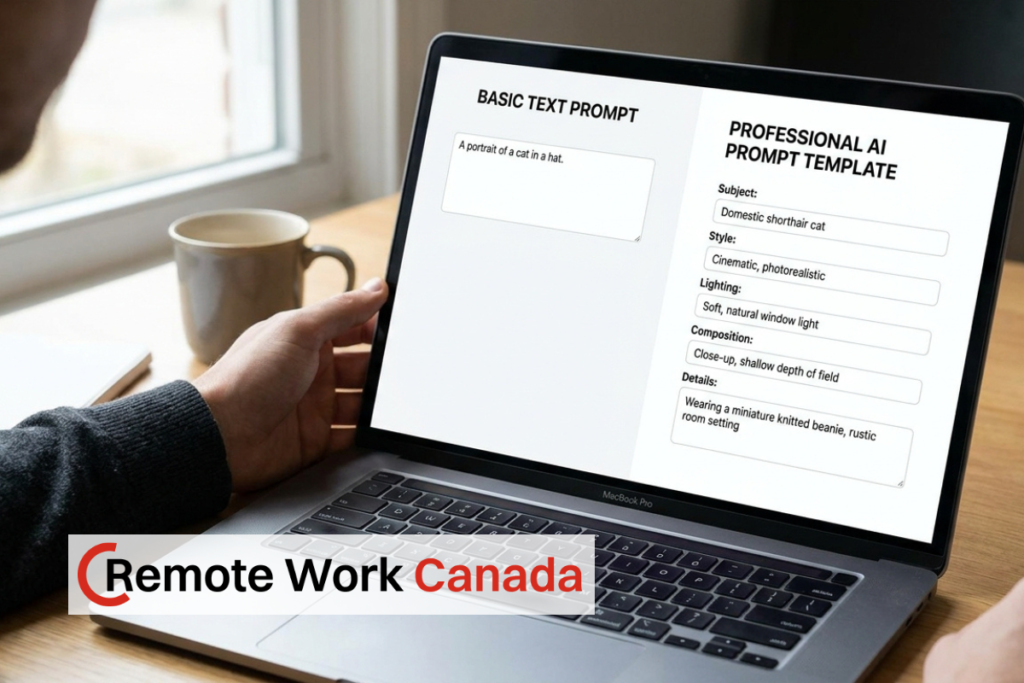
Second, avoid ambiguity. “Write a good marketing email” is a terrible prompt. “Act as a senior B2B SaaS copywriter. Write a 150-word outbound email targeting Chief Financial Officers. Focus on the pain point of legacy software costs. Use a professional but urgent tone. Do not use exclamation points,” is a professional prompt.
Finally, do not blindly trust the output. “The biggest amateur mistake is failing to verify,” notes AI Ethicist Dr. Julian Vance. “A professional engineer spends 20% of their time writing the prompt and 80% stress-testing the output for hallucinations, biases, and logical fallacies.”
Frequently Asked Questions
Do I need to learn Python or coding to be successful?
No. While knowing Python can help with API integration, the core skill of prompt engineering relies entirely on natural language processing, logic, and deep domain expertise. Most modern enterprise AI platforms feature no-code interfaces designed specifically for non-technical professionals.
How long does it take to learn these skills?
Dedicated learners can master foundational and advanced prompting frameworks in 3 to 6 months of consistent, daily practice. Building a strong portfolio and understanding the nuances of different LLMs is what takes the most time.
What is the average salary for this role in 2026?
Salaries vary based on domain expertise and location, but entry-level remote positions generally start around $95,000 to $110,000. Senior specialists who optimize massive enterprise workflows can earn upwards of $250,000 annually.
What is a “hallucination” in AI?
A hallucination occurs when an AI model confidently generates false, fabricated, or entirely illogical information. A core part of your job is designing prompts with strict constraints and contextual grounding to prevent the model from hallucinating.
Is this a long-term career or a temporary trend?
As models become more advanced, the exact nature of the role will evolve, but the core need for humans to direct, constrain, and strategically apply AI tools to business problems will only grow. It is a highly sustainable career path moving toward AI product management and workflow architecture.
Can I do this job as a freelancer?
Absolutely. Many professionals start as freelance consultants, helping small and medium-sized businesses automate specific tasks (like customer service triage or content generation) before transitioning to full-time enterprise roles.
Conclusion
Transitioning into the artificial intelligence industry in 2026 without a technical background is an exciting, highly achievable goal. By mastering the linguistics of AI, understanding structured frameworks like Few-Shot and Chain-of-Thought, and building a robust portfolio of real-world solutions, you can position yourself at the forefront of the generative AI revolution. Stop viewing AI as code and start treating it as a highly capable but literal-minded employee that needs flawless instructions. If you are ready to explore how to pivot your existing skills into a remote tech career, get in touch with our team today to discuss your next steps.