
Canadian employees who work from home can claim a portion of their household expenses on their annual tax return. The Canada Revenue Agency (CRA) allows two distinct methods for calculating these deductions: the temporary flat rate method and the detailed method. For the 2026 tax year, the flat rate method remains available, but the detailed method often yields a significantly larger refund for those who maintain proper records. Understanding which expenses qualify and how to calculate them is the first step toward reducing your taxable income.
Key Takeaways
- The CRA offers a temporary flat rate method ($2 per day up to $500) and a detailed method requiring actual receipts.
- Eligible expenses include utilities, rent, maintenance, and office supplies, but not mortgage principal or capital improvements.
- You must have a signed T2200 Declaration of Conditions of Employment from your employer to use the detailed method.
- Commissioned employees can deduct a broader range of expenses, including property taxes and home insurance.
- Maintaining a dedicated workspace and meticulous records is critical for audit protection.
- Self-employed individuals file deductions differently, using Form T2125 on their personal tax return.
- Provincial tax credits and GST/HST rebates can further offset work-from-home costs.
Eligibility Criteria for Home Office Deductions
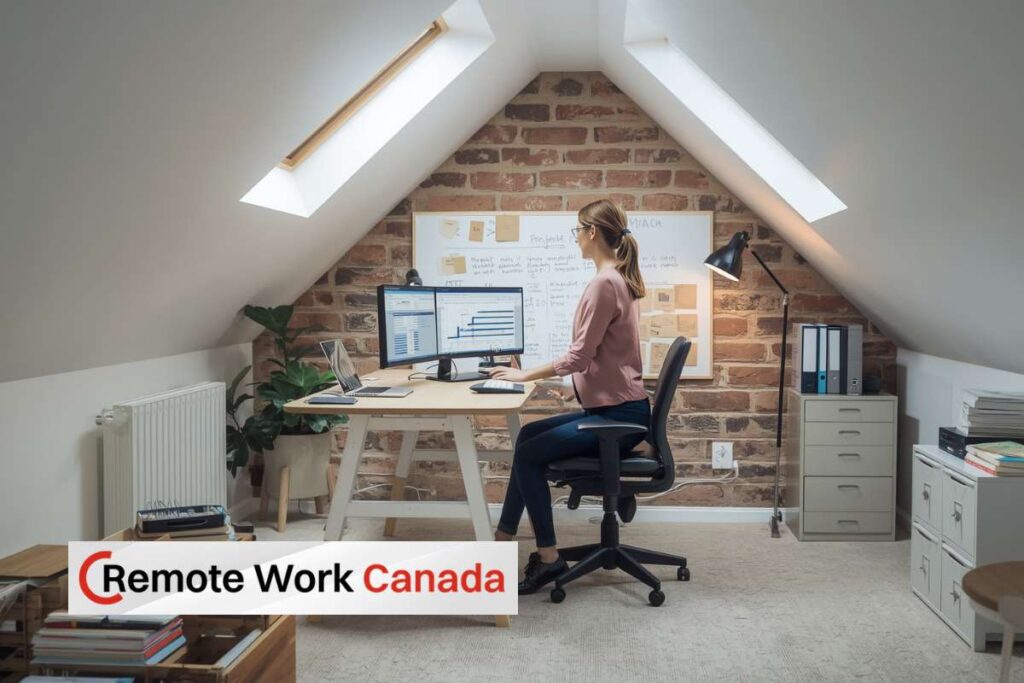
Not every Canadian working remotely automatically qualifies for tax deductions. The CRA stipulates that your home workspace must be where you principally perform your employment duties—meaning you spend more than 50% of your working hours there—or you must use the space exclusively for work and regularly meet clients, customers, or patients. According to the CRA, the workspace must also be a dedicated area used solely for employment purposes on a regular and continuous basis. A kitchen table used occasionally does not meet this threshold; a converted spare bedroom or a partitioned section of a basement used daily does.
Additionally, your employer must require you to maintain a home office. This requirement is formalized through Form T2200, Declaration of Conditions of Employment. As Sarah Mitchell, a Chartered Professional Accountant (CPA) at Mitchell & Associates in Toronto, explains: “The T2200 is the linchpin of any detailed claim. Without it, the CRA will disallow your home office expenses entirely. Employees must request this signed form from their employer before filing.” The form verifies that you were required to work from home, that you incurred expenses for which you were not reimbursed, and that a portion of those expenses relates to your employment use.

The Two CRA Calculation Methods for 2026
The CRA provides two pathways for claiming remote work expenses: the temporary flat rate method and the detailed method. Choosing the right one depends on your record-keeping habits and the nature of your expenses. Research from the Fraser Institute indicates that nearly 4.2 million Canadians worked from home at least part-time in 2025, a trend that has stabilized into a permanent hybrid model for 2026. This shift makes understanding these methods more relevant than ever.
Temporary Flat Rate Method
This simplified approach allows eligible employees to claim $2 for each day they worked from home during the tax year, up to a maximum of $500 per individual (250 working days). No receipts or employer forms are required. The calculation is straightforward: multiply your total work-from-home days by $2. For a full-time remote worker logging 230 days at home, the deduction equals $460. This method is ideal for those who lack detailed expense tracking or whose actual costs are relatively low.
Detailed Method
The detailed method requires calculating the actual amounts you paid for eligible expenses, supported by receipts, and then applying a reasonable percentage based on the size of your workspace relative to your home’s total finished area. For example, if your dedicated home office occupies 150 square feet and your home is 1,500 square feet, your business-use percentage is 10%. You then apply this percentage to your total annual eligible costs. According to a 2025 survey by the Canadian Payroll Association, employees using the detailed method claimed an average of $1,850 in deductions, compared to $420 under the flat rate method.
| Feature | Flat Rate Method | Detailed Method |
|---|---|---|
| Maximum Deduction | $500 per individual | No fixed cap (based on actual expenses) |
| Receipts Required | No | Yes, for all claimed expenses |
| Employer Form (T2200) | Not required | Required (signed T2200 or T2200S) |
| Calculation Basis | $2 per day worked at home | Actual costs × workspace percentage |
| Best For | Renters with few expenses, part-time remote workers | Homeowners, high-utility regions, commissioned employees |
Eligible Expenses Under the Detailed Method
The CRA categorizes deductible home office expenses into two groups: those available to all salaried employees and those reserved for commissioned employees. Understanding these distinctions prevents costly errors. As noted by the CRA’s official guidance, you cannot deduct expenses that have been or will be reimbursed by your employer.
Expenses for All Salaried Employees
- Electricity, heating, and water: The portion of utility bills attributable to your workspace.
- Rent: A percentage of monthly rent payments for tenants. Homeowners cannot deduct mortgage principal or interest.
- Maintenance and minor repairs: Costs for cleaning supplies, light bulbs, or painting the workspace. Major renovations or capital improvements are not deductible.
- Home internet access fees: The monthly service fee, but not connection or modem rental fees unless they are reasonable.
- Office supplies: Items consumed directly in your work, such as paper, pens, printer ink, and stationery. This does not include capital items like a desk or computer (those fall under capital cost allowance).
Additional Expenses for Commissioned Employees
Commissioned employees—those who earn income based on sales or contracts—enjoy a broader scope of deductible expenses. In addition to the above, they can claim:
- Property taxes: The percentage attributable to the workspace.
- Home insurance: The portion of premiums covering the home office area.
- Lease of equipment: Costs for leasing a cell phone, computer, or fax machine used for earning commission income.
Dr. Michael Chen, a tax policy researcher at the University of British Columbia, emphasizes: “The distinction between salaried and commissioned employees is rooted in the nature of their income generation. Commissioned workers bear more direct costs to produce income, so the tax system acknowledges that by expanding allowable deductions.”
Step-by-Step Guide to Claiming Your Deduction
Filing your remote work tax deductions accurately requires a methodical approach. Follow these steps to ensure compliance and maximize your claim.
- Determine Your Eligibility: Confirm that your home workspace meets the CRA’s criteria for principal place of employment or exclusive client-facing use. Review your employment contract for any remote work clauses.
- Obtain Form T2200: Request a completed and signed Declaration of Conditions of Employment from your employer. For the 2026 tax year, the CRA continues to accept the simplified T2200S for employees claiming only the flat rate method, though the detailed method requires the full T2200.
- Choose Your Calculation Method: Compare the potential deduction under both the flat rate and detailed methods. If your detailed expenses exceed $500, the detailed method is advantageous, provided you have the necessary documentation.
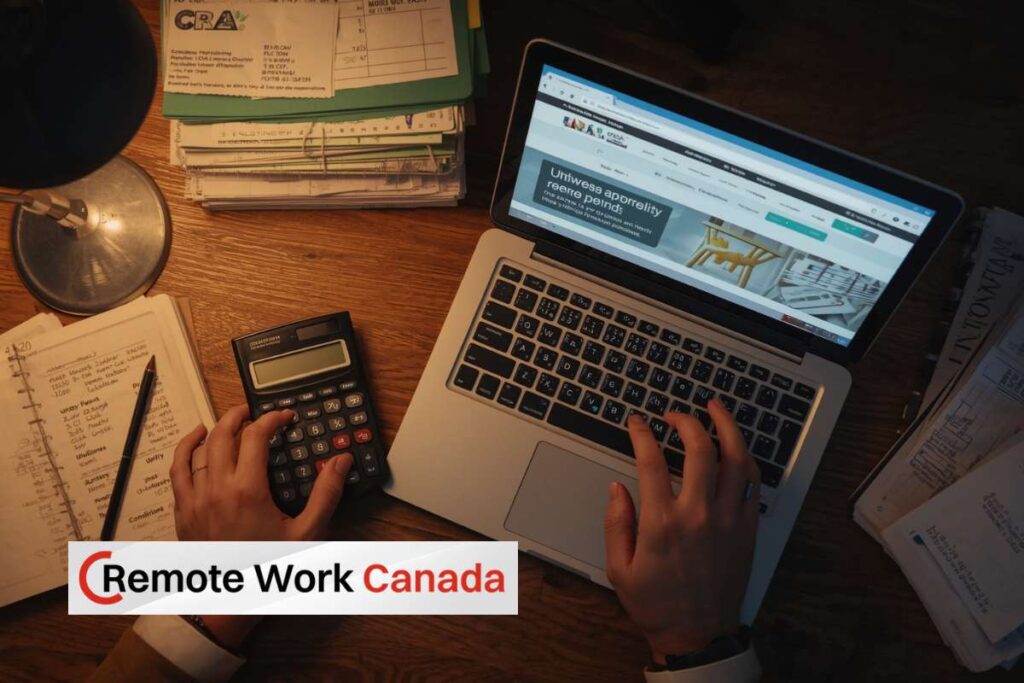
- Gather Supporting Documents: Collect all receipts, invoices, and bank statements for the tax year. Organize them by expense category (utilities, rent, supplies). Digital scans are acceptable to the CRA.
- Calculate Your Workspace Percentage: Measure the square footage of your dedicated workspace. Divide this by your home’s total finished square footage. For a 120 sq ft office in a 1,200 sq ft apartment, the percentage is 10%.
- Compute the Deduction: Multiply each eligible expense total by your workspace percentage. Sum these amounts. For commissioned employees, include the additional categories.
- Complete Your Tax Return: Enter the total deduction on Line 22900 (Other employment expenses) of your T1 General return. Attach a detailed statement outlining your calculations. File your return electronically using NETFILE-certified software, which guides you through the T777 Statement of Employment Expenses form.
- Retain Records: The CRA requires you to keep all supporting documents for six years from the date of your notice of assessment. Store them in a secure, organized manner.
Common Mistakes and Audit Triggers
Even diligent taxpayers can make errors that invite CRA scrutiny. The most frequent mistake is claiming ineligible expenses. Mortgage principal payments, capital improvements like a new roof or furnace, and general home internet usage unrelated to work are not deductible. Another pitfall is overstating the workspace percentage. The CRA expects a reasonable allocation; claiming 50% of a home’s expenses for a small corner desk in a living room will raise red flags.
Failing to prorate expenses for part-year remote work is another common oversight. If you worked from home for only six months of the year, you must adjust your utility and rent costs accordingly. As Priya Kapoor, a senior tax analyst at TurboTax Canada, warns: “We see many filers apply their full annual rent to a workspace used for only a few months. The CRA’s matching algorithms flag these discrepancies quickly. Always prorate based on the number of months the space was used exclusively for work.”
Finally, neglecting to claim the GST/HST rebate on eligible expenses is a missed opportunity. Employees who deduct home office expenses can also claim a rebate for the GST/HST paid on those same expenses using Form GST370. This effectively reduces your out-of-pocket costs by the tax component.
Special Considerations for Self-Employed Canadians
Self-employed individuals and freelancers operate under a different set of rules. Instead of Form T2200 and the employment expense deduction, they report business income and expenses on Form T2125, Statement of Business or Professional Activities. The range of deductible home office expenses is broader for the self-employed, including a portion of mortgage interest (but not principal), capital cost allowance on equipment, and business-use-of-home expenses calculated on a more flexible basis. However, the CRA scrutinizes these claims closely to ensure the space is used exclusively and regularly for business. A 2024 report from Statistics Canada noted that 2.8 million Canadians were self-employed, many operating from home offices, making this a critical distinction.
Self-employed individuals must also be mindful of the “principal place of business” test. If you have another office outside the home, your home workspace deductions may be limited. Consulting a tax professional is advisable, as errors on Form T2125 can trigger a full business audit.
Provincial Tax Credits and Regional Variations
While the federal deduction rules apply uniformly, several provinces offer additional credits or rebates that can benefit remote workers. For instance, Ontario’s Ontario Energy and Property Tax Credit (OEPTC) provides relief for low-to-moderate-income individuals on sales tax paid on energy and property taxes. British Columbia’s Climate Action Tax Credit is another example, though it is income-tested and not directly tied to home office use. Residents of Quebec must navigate Revenu Québec’s distinct rules, which generally mirror federal guidelines but require separate filing on the provincial return.
According to data from the Canadian Federation of Independent Business, provincial tax burdens vary significantly, with Quebec and Atlantic Canada often having higher marginal rates. This makes maximizing federal deductions even more critical for residents in those regions. Always review your province’s specific tax guide or consult a local accountant to capture every available credit.
Technology and Tools for Expense Tracking
Maintaining meticulous records is the cornerstone of a successful detailed claim. Modern technology simplifies this process. Cloud-based accounting software like QuickBooks Self-Employed or Wave automatically categorizes expenses when linked to your bank account. Mobile apps such as Expensify or Dext allow you to photograph receipts on the go, extracting key data using optical character recognition (OCR). The CRA accepts digital records, provided they are clear and legible.
For those who prefer a manual approach, a dedicated spreadsheet with columns for date, vendor, amount, category, and workspace percentage is sufficient. The critical factor is consistency. Set a recurring weekly reminder to log expenses. As tax season approaches, this habit transforms a daunting task into a simple review.
Frequently Asked Questions
Can I claim a dedicated home office if I also work from an employer’s office part-time?
Yes, provided your home workspace is where you principally perform your duties (more than 50% of the time) or you use it exclusively for employment and regularly meet clients there. You must prorate your expenses to reflect only the period of home use.
Is a signed T2200 form mandatory for the flat rate method?
No. The CRA does not require a T2200 or T2200S for the temporary flat rate method. You simply claim the deduction based on your count of work-from-home days.
What happens if my employer reimburses some of my home office costs?
You cannot claim any expense that has been reimbursed. If your employer pays a portion of your internet bill, you must subtract that amount before calculating your deduction. Reimbursements are typically non-taxable if they cover actual expenses.
Can I deduct the cost of a new laptop or ergonomic chair?
Salaried employees generally cannot deduct capital items like furniture or computers. These are considered capital assets. Self-employed individuals may claim capital cost allowance (depreciation) on such items over several years.
How long should I keep my tax records and receipts?
The CRA requires you to retain all supporting documents for six years from the end of the tax year to which they relate. Store digital copies securely in the cloud or on an external drive.
Are condo fees deductible as a home office expense?
For salaried employees, condo fees are not deductible. For commissioned employees, a portion of the maintenance component of condo fees may be claimed, but not any portion allocated to a reserve fund.
Can roommates or spouses both claim the same home office?
Yes, if both individuals meet the eligibility criteria and use the same dedicated workspace, they can each claim a proportionate share of the expenses. The total claimed by all parties cannot exceed 100% of the actual costs.
Conclusion
Navigating remote work tax deductions in Canada requires a clear understanding of CRA rules, diligent record-keeping, and a strategic choice between the flat rate and detailed methods. While the flat rate offers simplicity, the detailed method unlocks significantly greater savings for those who invest the time in documentation. From utility bills and rent to the critical T2200 form, every element of your claim must be accurate and defensible. The landscape of remote work has permanently shifted, and with it, the tax obligations and opportunities for millions of Canadians.
To ensure you are maximizing your refund while remaining fully compliant, consider consulting a qualified tax professional. For additional resources on remote work arrangements and career opportunities, visit our Resources page. If you are seeking new remote positions that support a home office lifestyle, explore our Remote Work listings. Ready to take the next step in your career? Submit your resume today and connect with employers who value flexible work arrangements.
References
- Canada Revenue Agency. “Home office expenses for employees.” canada.ca
- Fraser Institute. “Working from Home in Canada: 2025 Update.” fraserinstitute.org
- Canadian Payroll Association. “2025 Employee Expense Survey.” payroll.ca
- Statistics Canada. “Labour Force Survey, 2024.” statcan.gc.ca
- TurboTax Canada. “Remote Work Tax Guide 2026.” turbotax.intuit.ca
- Canadian Federation of Independent Business. “Provincial Tax Comparison 2025.” cfib-fcei.ca
- Revenu Québec. “Employment Expenses.” revenuquebec.ca